
LAPIP Failing Implant Treatment
Safeguarding your dental implants with advanced laser therapy.
Why treat gum disease around an implant?
Dental implants are a predictable way to replace missing teeth permanently with very high success rates. However, implant failures can happen in very rare cases. Complications like peri-implantitis happen when the tissues around the implant become inflamed or infected. This can lead to failing dental implants, which might become painful, loose, or even fall out.
The American Dental Health Providers team is dedicated to protecting your smile for life.
We're proud to offer cutting-edge laser treatments for failing dental implants in Downey, Fallbrook, Torrance and Long Beach, CA. This minimally invasive, gentle treatment could save your failing dental implants so you can keep loving your smile for years.
Signs & symptoms of moderate to advanced peri-implantitis
- Swollen and bleeding gums
- Implant mobility (loosening)
- Change in gum color surrounding the implant
- Hypersensitive gums
- Mild to severe pain around the implant site
- Exposure of the implant post
- Visible pus in gum tissue around the implant
If you notice any of these around an existing implant, call us promptly. Peri-implantitis responds far better to early treatment, and waiting risks losing the implant altogether.
How LAPIP can save failing dental implants without surgery
Laser Assisted Peri-Implantitis Procedure (LAPIP) is a gentle, laser-based treatment designed to clean and heal the area around your failing dental implants. This specialized laser targets bacteria and diseased tissue while stimulating healthy cells to regenerate lost bone volume and tissue attachment without surgery, helping your implants become healthy and strong again.
LAPIP has been a game-changer for treating peri-implantitis with very high success rates. It's a key part of how we can protect the work you've done to rebuild your oral health with dental implants.
Frequently asked questions
Is LAPIP surgery?
No. LAPIP treats the area around a failing implant without surgery. It is a gentle, minimally invasive, laser-based treatment.
Can a failing implant really be saved?
Often, yes. The laser targets bacteria and diseased tissue while stimulating healthy cells to regenerate lost bone volume and tissue attachment, helping implants become healthy and strong again.
How common is implant failure?
Dental implants are a predictable way to replace missing teeth permanently with very high success rates. Implant failures happen in very rare cases, usually through peri-implantitis.
Worried about an implant?
If an existing implant is sore, loose, or the gum around it has changed, have it looked at now.
What to expect during LAPIP laser treatment for a failing dental implant
LAPIP, the Laser-Assisted Peri-Implantitis Procedure, is a minimally invasive option providers may consider when an implant shows signs of peri-implantitis: bleeding, inflammation around the gumline, or early bone loss. Understanding the sequence of a visit helps patients prepare and ask informed questions.
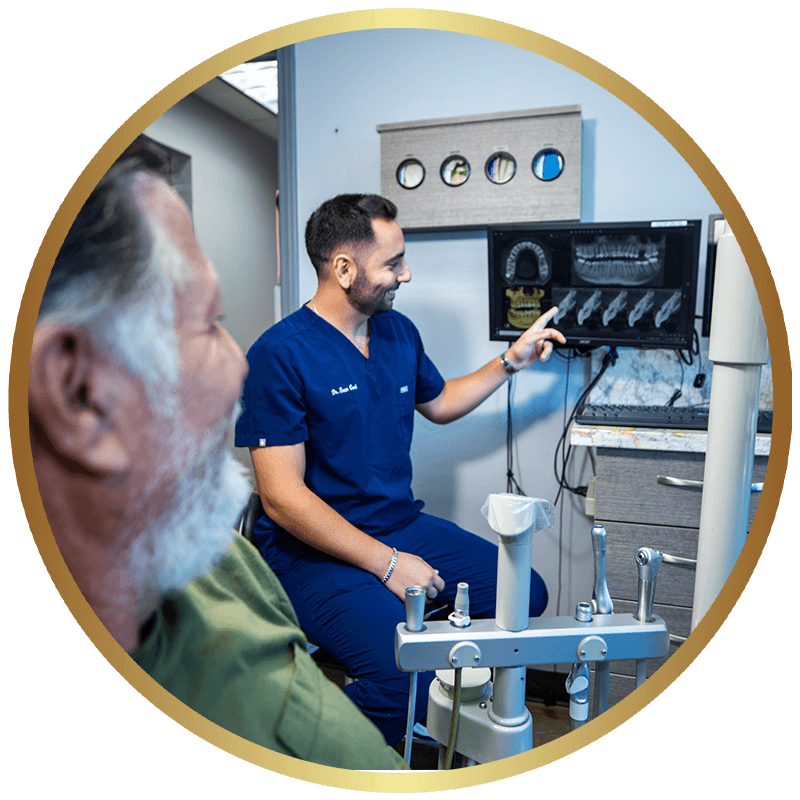
Before treatment, the clinical team evaluates the implant with a focused exam and imaging to assess how much supporting bone remains and whether the implant is still stable. This assessment determines whether LAPIP is appropriate or whether a different approach is indicated. Patients are typically asked about their medical history, current medications, and any history of grinding or smoking, since these factors can influence how the surrounding tissue responds.
During the procedure, the area is numbed with local anesthetic. A dental laser is guided along the pocket around the implant, where it is used to remove inflamed tissue and reduce the bacteria associated with the infection. Because the laser targets diseased tissue selectively, healthy structure is generally preserved and no scalpel incision or sutures are required. The implant surface is then cleaned, and the laser energy is applied again to help form a stable clot that seals the pocket.
Most appointments are completed in a single visit, though the number of sites treated affects the total time. Patients commonly describe the recovery as more comfortable than traditional gum surgery, with less bleeding and swelling. The clinical team usually provides specific aftercare instructions, which may include a soft-food period, gentle hygiene around the site, and avoiding disturbance of the treated area while it settles.
Factors that influence LAPIP outcomes
Results vary from person to person. Patients who respond well typically maintain consistent home care and attend scheduled follow-up visits so the provider can monitor tissue healing and implant stability over time. Managing contributing factors, such as controlling grinding with a night guard or addressing smoking, can support a more favorable response. In cases where bone loss is advanced, the provider may discuss additional or alternative treatment options rather than LAPIP alone.
Patients considering this procedure are encouraged to discuss their individual situation, expectations, and any concerns with their provider so the plan reflects their specific anatomy and health history.
This page is informational and is not medical advice. Treatment options should always be made in consultation with a qualified dentist.