2026-06-23
Signs You May Need A Dental Crown In Fallbrook Ca
Wondering if you need a dental crown? Learn the common signs, how dental crowns work, and when to see a dentist in Fallbrook, CA for evaluation and treatment.
Read article

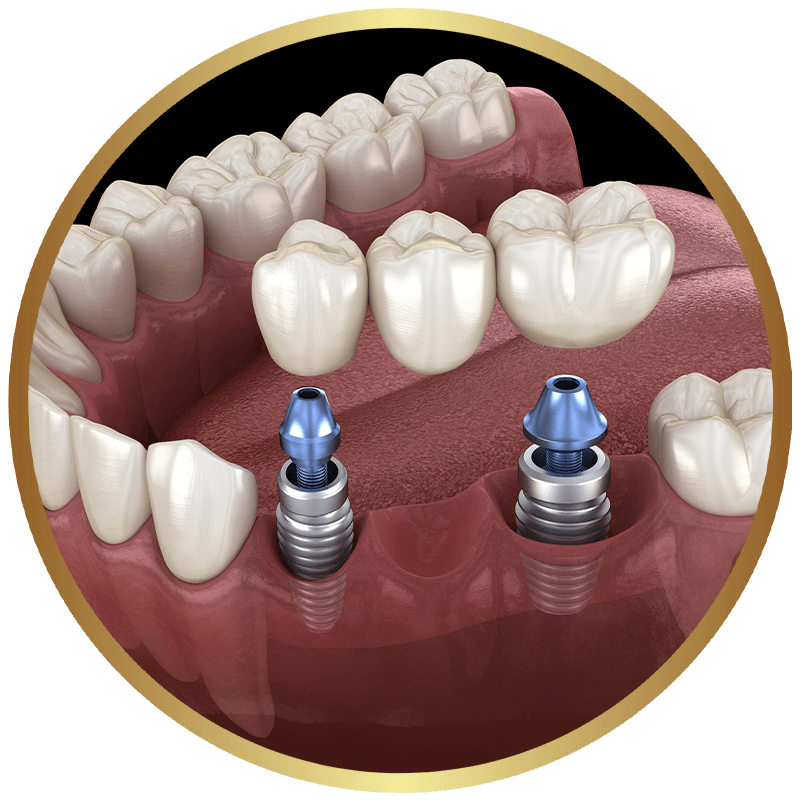
Dental implants have transformed the way we restore missing teeth, offering a permanent, stable, and natural-looking replacement that works just like the tooth it replaces. At their core, every implant consists of three components that work together as a single system.
Titanium implant post: placed surgically into the jawbone, this acts as the new tooth root. Titanium is used because it is biocompatible and undergoes osseointegration — a process in which living bone cells bond directly to the implant surface over the following months. This biological bond is what gives implants their stability and longevity.
Abutment: once osseointegration is confirmed, the abutment is attached to the top of the post. It serves as the connection point between the buried post and the visible crown above the gum line.
Crown: the outermost component, custom-fabricated to match the shade and contour of your surrounding teeth. This is the only part that is visible above the gum line, and it is designed to be indistinguishable from a natural tooth.
A complete implant restoration includes the post, abutment, crown, and the laboratory fabrication of the final crown. When comparing providers, always confirm that a quoted treatment covers all three components plus lab work — a quote that covers the implant post alone does not represent the full treatment.
At ADHP, we have an in-house dental laboratory, which gives us direct control over the quality and timeline of your final restoration. Our lab team works on your case personally, which means fewer delays and tighter quality control than practices that outsource to external labs.
Not every patient is an immediate candidate for implants, and a thorough evaluation is essential before any treatment begins. The factors we assess include:
The skill, training, and equipment of the practice you choose are among the most important factors in a successful outcome. When evaluating providers, look for:
At ADHP, every implant case begins with a comprehensive consultation that includes a clinical exam, a review of your medical and dental history, and CBCT imaging. We provide a written treatment plan — covering every step and every component — before any procedure is scheduled. Our team has decades of combined implant experience, and our in-house laboratory means your restoration is fabricated by people who know your case personally.
We serve patients across four Southern California locations: Downey, Fallbrook, Torrance, and Long Beach.
The best way to know whether a dental implant is the right choice for your situation is to have a thorough evaluation. Contact us to schedule a consultation at any of our four Southern California offices — Downey, Fallbrook, Torrance, or Long Beach.
This article is general information published by American Dental Health Providers. It is not a diagnosis and does not replace an in-person examination. If you have symptoms, book an appointment or call (562) 923-0038.
Book an assessment at any of our four Southern California offices.
2026-06-23
Wondering if you need a dental crown? Learn the common signs, how dental crowns work, and when to see a dentist in Fallbrook, CA for evaluation and treatment.
Read article
2026-06-23
Bleeding gums when brushing or flossing? Learn the common causes of bleeding gums, when to be concerned, and when to see a dentist in Torrance, CA.
Read article
2026-05-26
Loose tooth as an adult? Learn the causes, what to do immediately, and when to see a dentist in Torrance, CA before it becomes serious.
Read articleNeed more help? Read our accessibility statement.